
VO2 Max Guide
Your Blueprint for Human Performance
This is not a textbook. This is an action plan. Below are the evidence-based metrics, training protocols, and fuelling strategies required to improve your maximal oxygen uptake—the ceiling of your aerobic potential.
SECTION 1: THE METRICS 'Know Your Baseline'
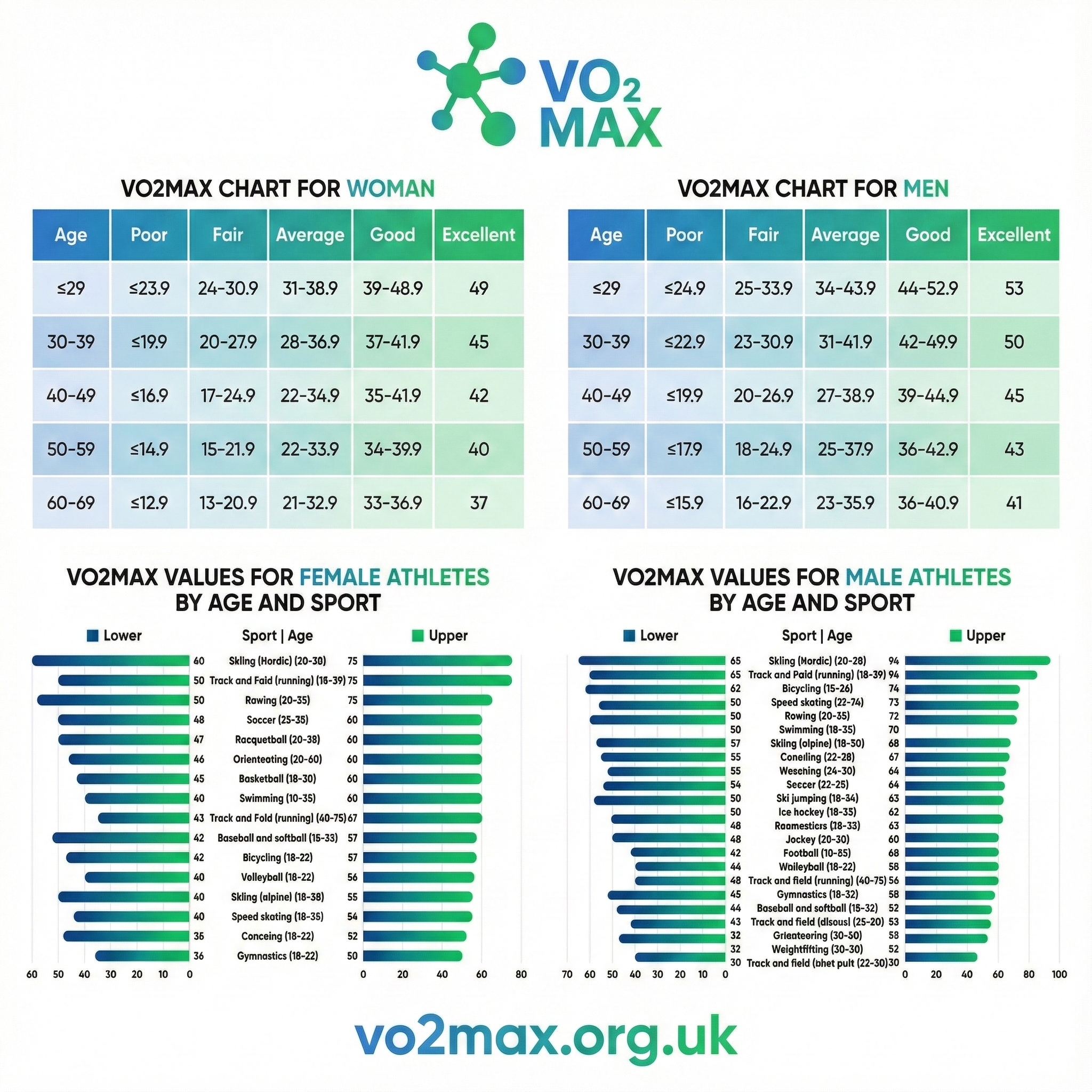
Where do you stack up? These charts use the "Gold Standard" normative data from the ACSM and Cooper Institute for general populations, and elite physiological data for athlete benchmarks.
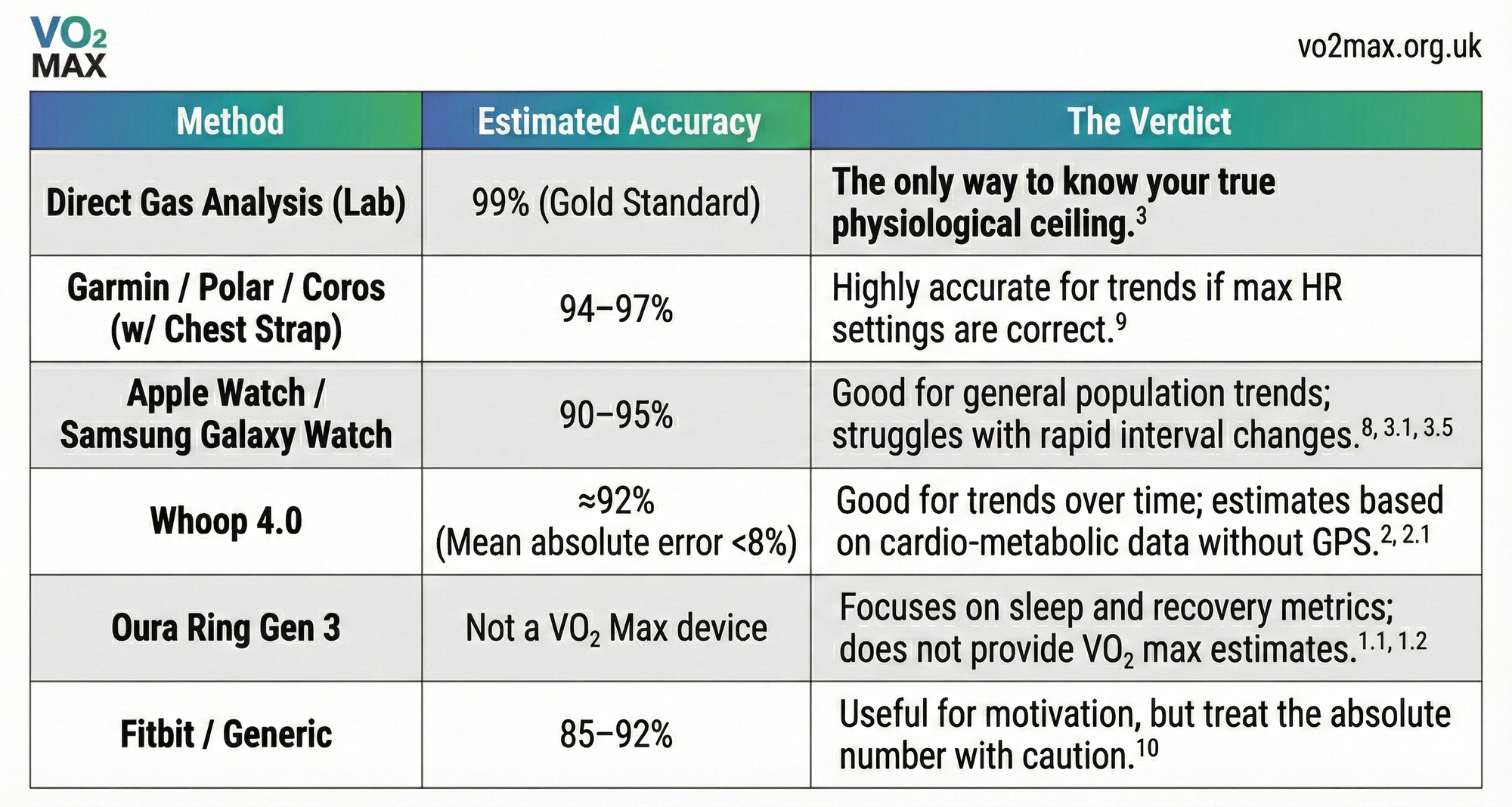
Smart devices vs. The Lab: A Reality Check
Most users rely on wearables. It is vital to understand their limitations compared to clinical testing.
SECTION 2: THE ENGINE (Training Protocols)
To increase VO₂ max, you need a large aerobic base and specific, high-intensity stimuli.
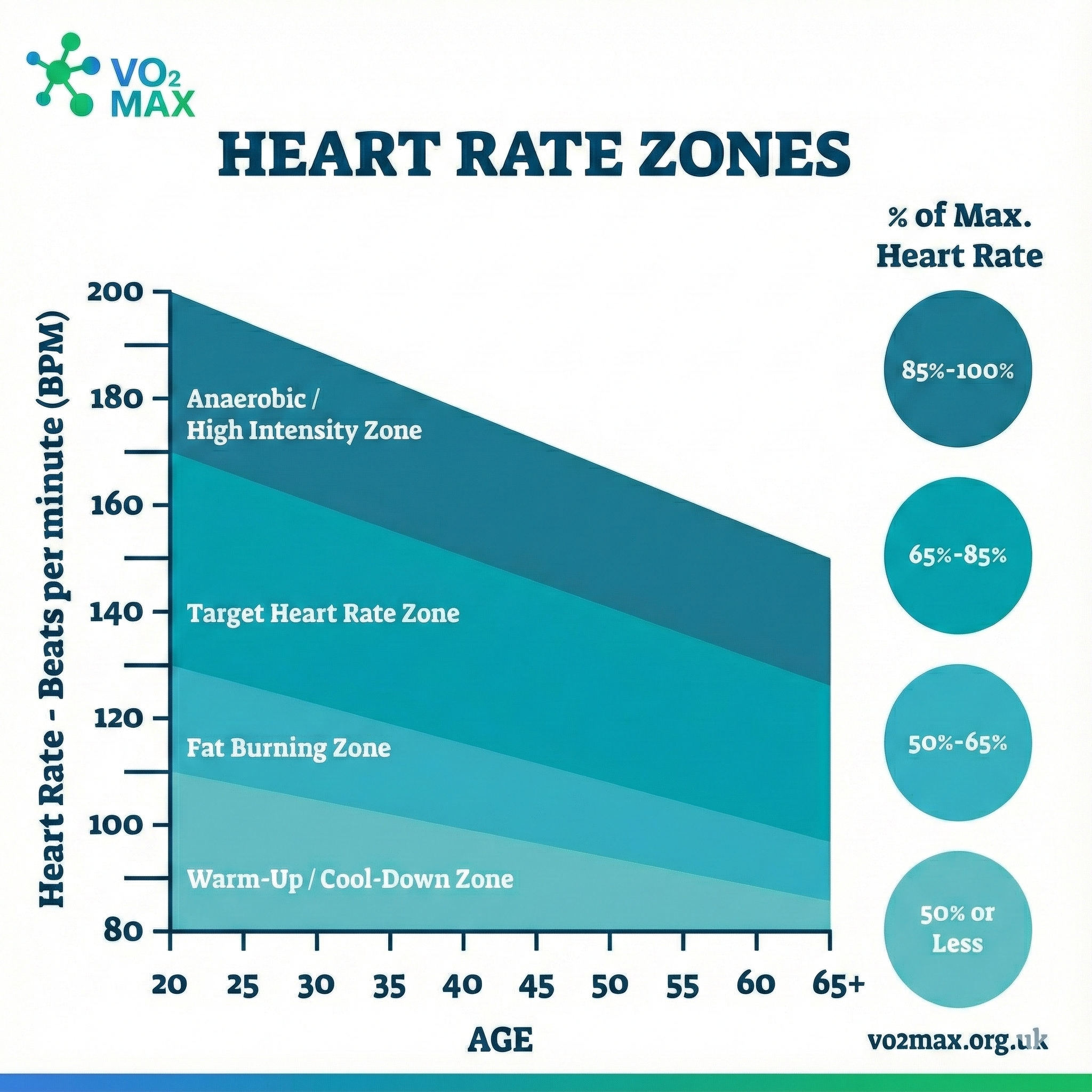
Understanding Your Training Zones
Effective training requires discipline. You must train either very easy (Zone 2) to build infrastructure, or very hard (Zone 5) to boost top-end capacity. Avoid the "grey zone" (Zone 3) where you accumulate fatigue without optimal adaptation.
SECTION 2: THE ENGINE (Training Protocols)
To increase VO₂ max, you need a large aerobic base and specific, high-intensity stimuli.
Understanding Your Training Zones
Effective training requires discipline. You must train either very easy (Zone 2) to build infrastructure, or very hard (Zone 5) to boost top-end capacity. Avoid the "grey zone" (Zone 3) where you accumulate fatigue without optimal adaptation.
The "Big 3" Evidence-Based Protocols
1. The Foundation: Zone 2 Volume²⁰
You cannot build a skyscraper on a swamp.
- The Goal: Increase mitochondrial density and capillary networks.
- Intensity: 60–70% of HRmax. You must be able to hold a conversation.
- Execution: Long, steady efforts of 45–90+ minutes. This should make up ~80% of your total weekly training time.
2. The Gold Standard: The "Norwegian" 4x4¹⁶
Highest proven efficiency for increasing stroke volume (the heart's pumping capacity).
- Warm-up: 10–15 minutes easy.
- The Work: 4 intervals of 4 minutes at 90–95% HRmax. (This hurts).
- The Rest: 3 minutes active recovery (keep moving slowly) at ~70% HRmax between sets.
- Frequency: 1–2 times per week maximum.
3. The Velocity Booster: Billat 30/30s¹⁷
Best for runners needing to improve running economy at speed.
- The Work: 30 seconds at 100% vVO₂max (roughly your best 6-minute mile pace).
- The Rest: 30 seconds at 50% of that speed.
- Volume: Repeat continuously until you can no longer hold the pace (aim for 15–24 reps).
SECTION 3: THE FUEL (Nutrition & Hydration)
Performance nutrition is about matching fuel intake to training demands.
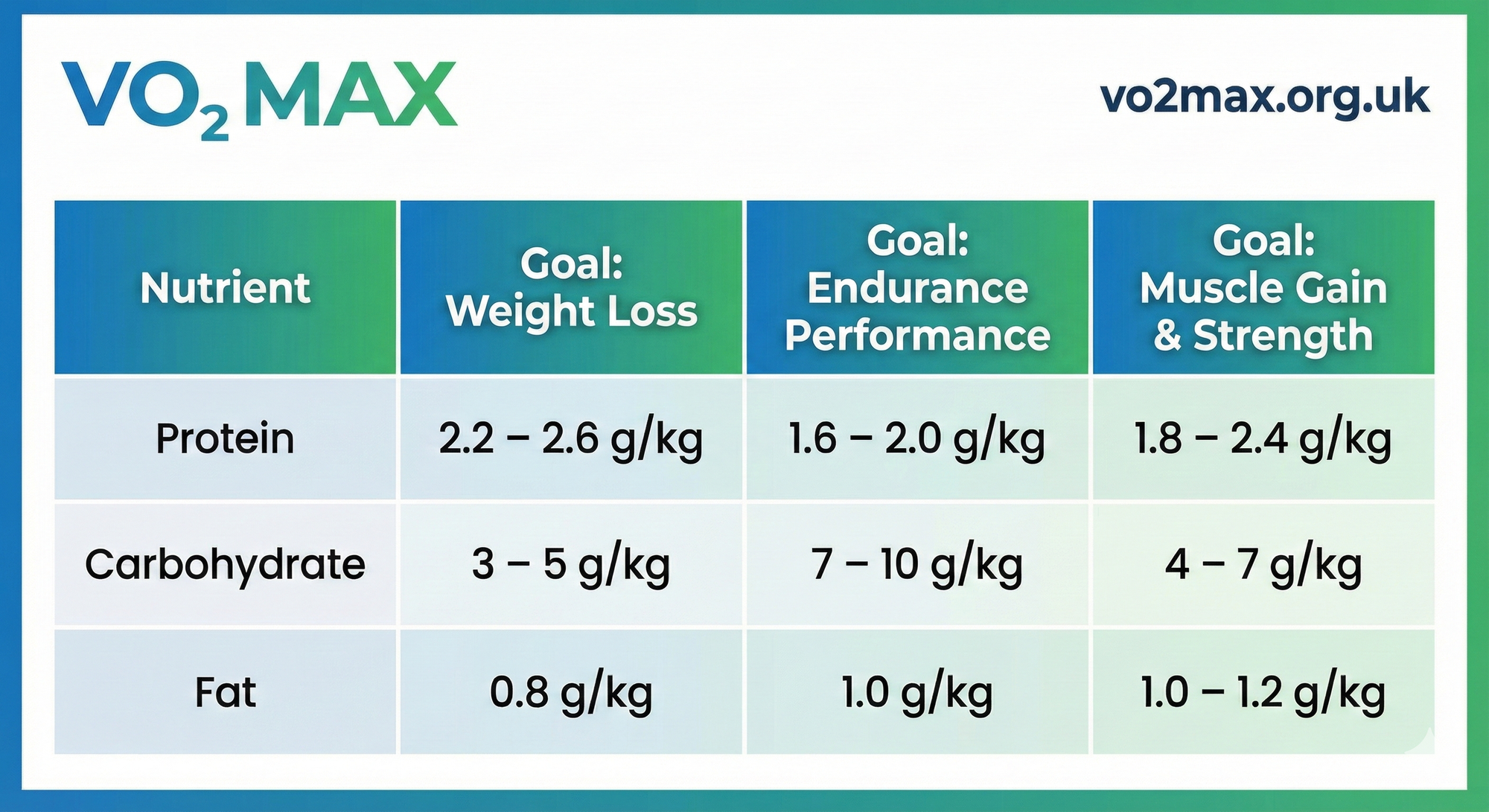
Daily Macronutrient Targets
Based on ISSN and IOC consensus statements.¹¹ ¹² ¹³
The Timing:
- Pre-Workout (30–60 mins prior): 30–60g fast-digesting carbs (e.g., Banana, white toast with jam, energy gel). Keep fat and fibre low to avoid gut distress.¹²
- During Workout: Only necessary if training >90 minutes. Aim for 30–60g carbs/hour (gels or drink mix).
- Post-Workout (The Window): Consume 20–30g Protein + Carbohydrates ASAP after hard sessions to spike insulin and refill muscle glycogen swiftly.
SECTION 4: THE OPTIMISERS (Recovery & Supplements)
You do not get fitter when you train; you get fitter when you recover from training.
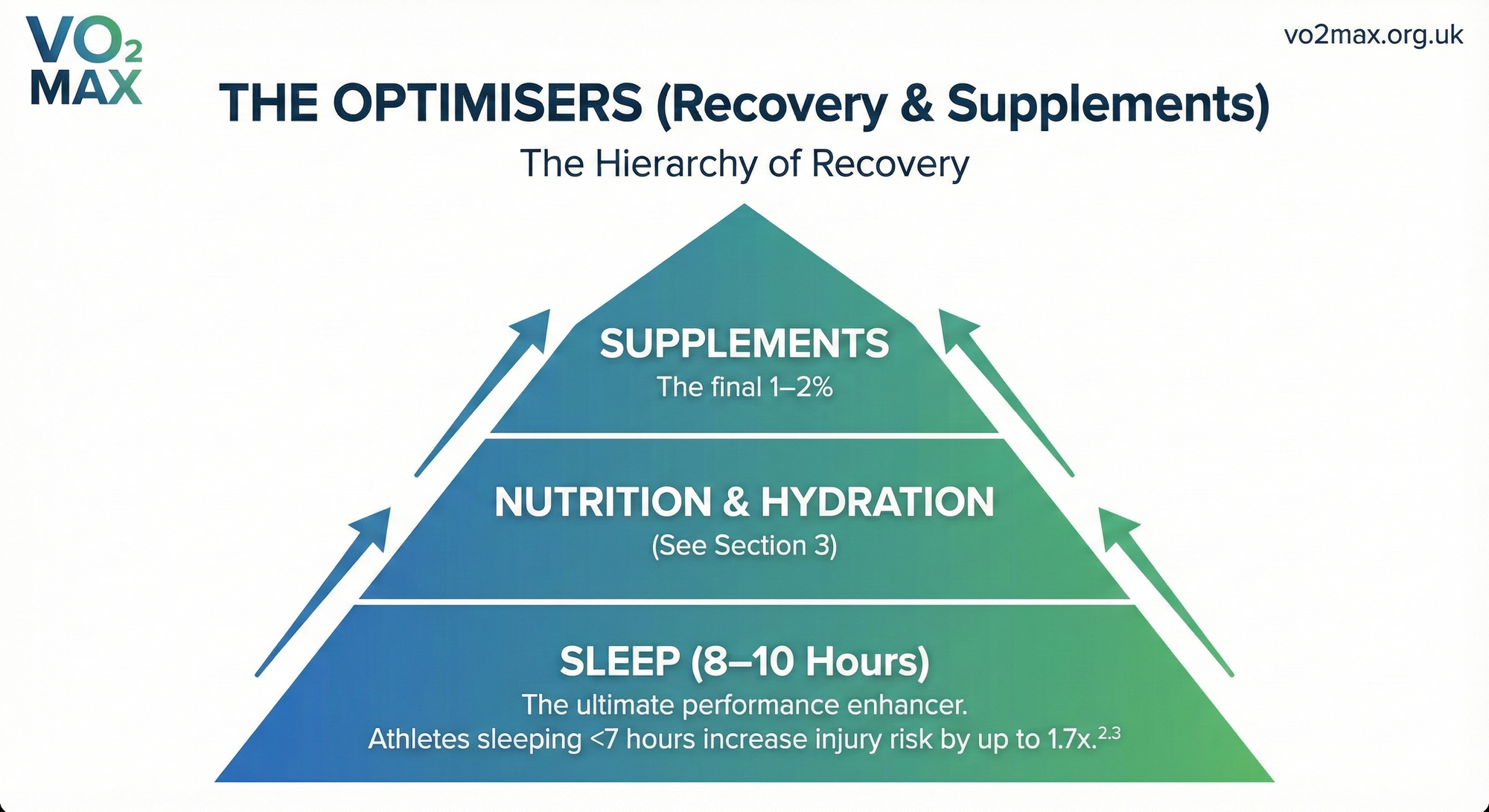
The Hierarchy of Recovery
Before buying supplements, ensure your foundation is solid.
- Sleep: The ultimate performance enhancer. Athletes sleeping <7 hours increase injury risk by up to 1.7x. Aim for 8–10 hours.²³
- Nutrition & Hydration: (See Section 3).
- Supplements: The final 1–2%.
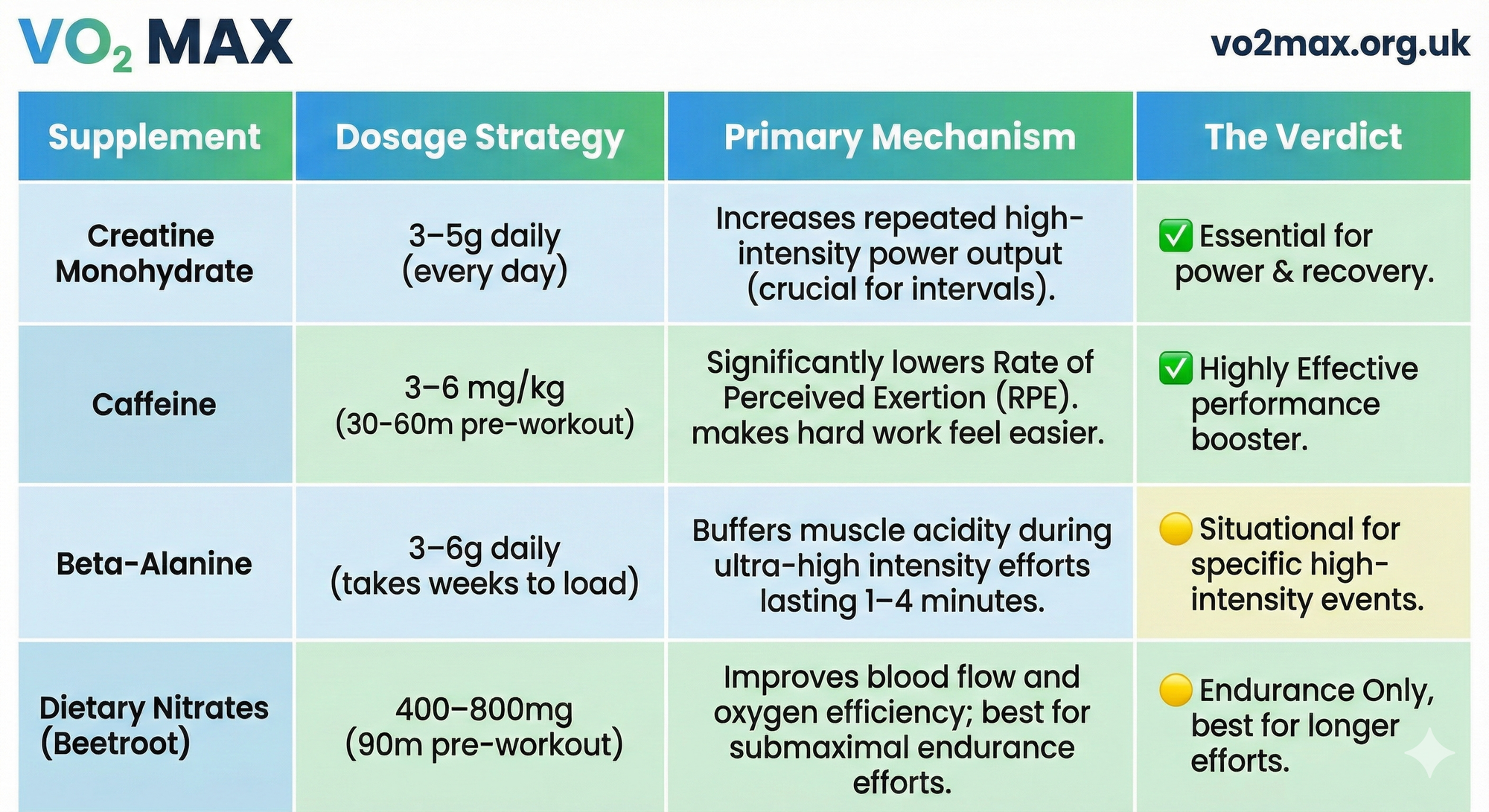
Evidence-Based Supplement Tier List
Only supplements with strong evidence for aerobic/anaerobic performance.¹¹ ²⁵ ²⁶ ²⁷
SECTION 5: THE TIMELINE 'Managing Expectations'
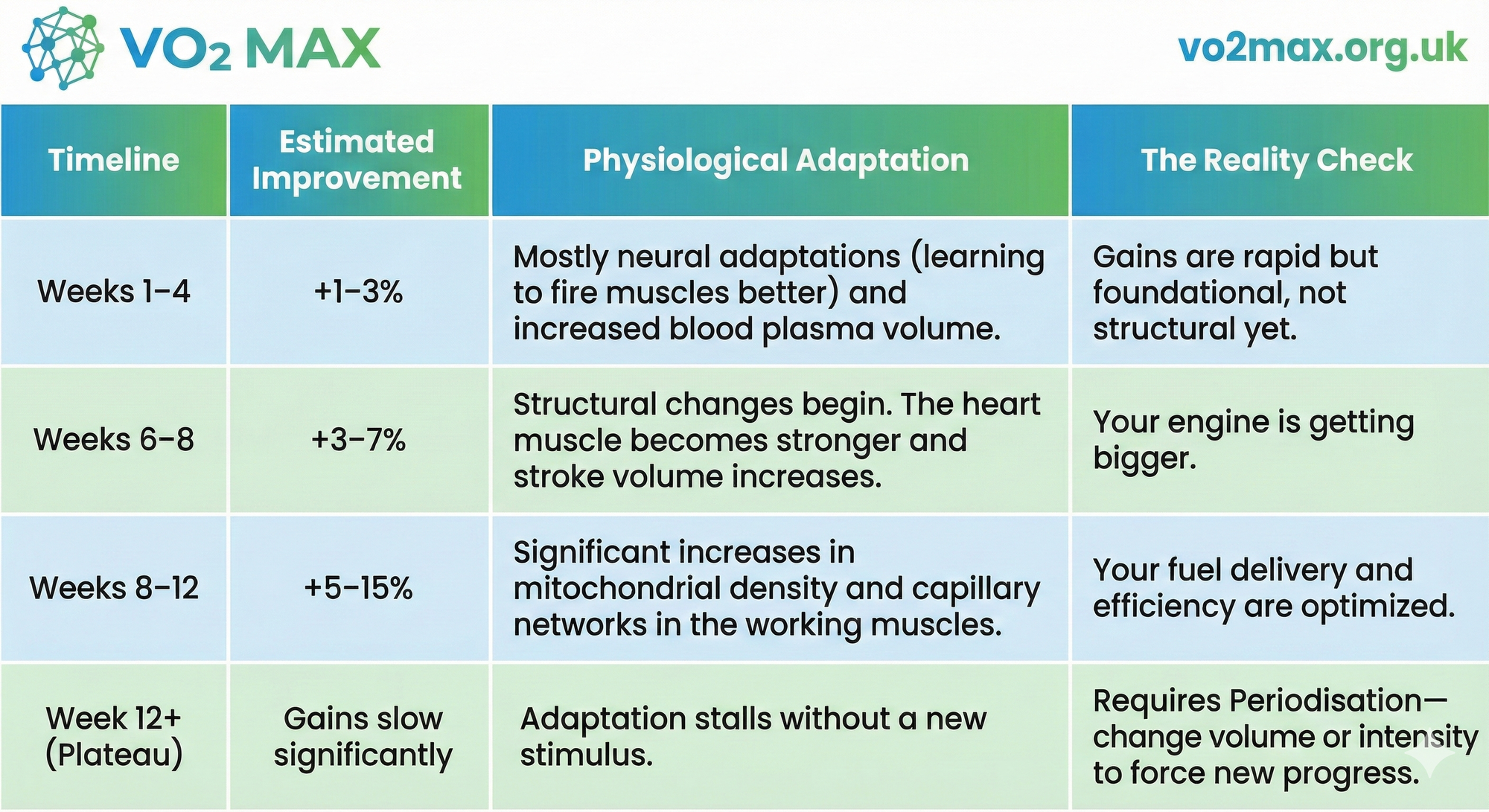
Physiological adaptation takes time. Based on data from untrained to moderately trained individuals, here is a realistic timeline for VO₂ max improvement.²⁸
- Weeks 1–4 (+1–3%): Mostly neural adaptations (learning to fire muscles better) and increased blood plasma volume.
- Weeks 6–8 (+3–7%): Structural changes begin. The heart muscle becomes stronger and stroke volume increases.
- Weeks 8–12 (+5–15%): Significant increases in mitochondrial density and capillary networks in the working muscles.
- Week 12+ (Plateau): Gains will slow down significantly. Continued progress requires Periodisation—changing the training stimulus (volume or intensity) to force new adaptations.
References
1. Normative Data & Physiology Standards
- [1] American College of Sports Medicine (ACSM). (2021). ACSM’s Guidelines for Exercise Testing and Prescription (11th ed.). Wolters Kluwer.
- [2] The Cooper Institute. (2010). Physical Fitness Assessments and Norms for Adults and Law Enforcement. Dallas, TX.
- [14] Kenney, W. L., Wilmore, J. H., & Costill, D. L. (2019). Physiology of Sport and Exercise (7th ed.). Human Kinetics. (Source for Elite Athlete VO₂ max ranges).
2. Testing Protocols & Wearable Accuracy
- [3] Joyner, M. J., & Coyle, E. F. (2008). Endurance exercise performance: the physiology of champions. The Journal of Physiology, 586(1), 35–44.
- [4] Kline, G. M., et al. (1987). Estimation of VO2max from a one-mile track walk, gender, age, and body weight. Medicine & Science in Sports & Exercise, 19(3), 253-259.
- [5] Cooper, K. H. (1968). A means of assessing maximal oxygen intake. Journal of the American Medical Association (JAMA), 203(3), 201-204.
- [6] Golding, L. A. (2000). YMCA Fitness Testing and Assessment Manual (4th ed.). Human Kinetics.
- [7] Coyle, E. F., et al. (1991). Cycling efficiency is related to the percentage of type I muscle fibers. Medicine & Science in Sports & Exercise, 23(6), 718-725.
- [8] Falter, M., et al. (2019). Accuracy of Apple Watch Measurements for Heart Rate and Energy Expenditure. Journal of Personalized Medicine, 9(4), 55.
- [9] Giles, D., et al. (2016). The Validity of Smartwatch-Based versus Standard Laboratory Measures of VO2max. Medicine & Science in Sports & Exercise, 48(10), 1819-1828. (Validation of Firstbeat algorithms used by Garmin).
- [10] Bunn, J. A., et al. (2018). Validity of Consumer-Based Wearable Technology for Measuring Energy Expenditure. International Journal of Exercise Science, 11(7), 517–525.
- [29] Berryhill, S., et al. (2020). Effect of Wearables on Sleep in Healthy Individuals: A Randomized Crossover Trial. International Journal of Environmental Research and Public Health; see also WHOOP Inc. (2023) Internal Validation of Respiratory Metrics.
- [30] Cao, R., et al. (2022). Accuracy Assessment of Oura Ring Nocturnal Heart Rate and HRV in Comparison with Electrocardiography. Journal of Medical Internet Research, 24(11).
3. Training Protocols
- [15] Tanaka, H., Monahan, K. D., & Seals, D. R. (2001). Age-predicted maximal heart rate revisited. Journal of the American College of Cardiology, 37(1), 153-156.
- [16] Helgerud, J., et al. (2007). Aerobic high-intensity intervals improve VO2max more than moderate training. Medicine & Science in Sports & Exercise, 39(4), 665-671.
- [17] Billat, V. L., et al. (2000). Interval training at VO2max: effects on aerobic performance and overtraining markers. European Journal of Applied Physiology, 82(3), 156-157.
- [20] Seiler, S. (2010). What is best practice for training intensity and duration distribution in endurance athletes? International Journal of Sports Physiology and Performance, 5(3), 276-291.
4. Nutrition & Hydration
- [11] Jäger, R., et al. (2017). International Society of Sports Nutrition Position Stand: protein and exercise. Journal of the International Society of Sports Nutrition, 14, 20.
- [12] Burke, L. M., et al. (2011). Carbohydrates for training and competition. Journal of Sports Sciences, 29(Sup1), S17-S27. (IOC Consensus).
- [13] Thomas, D. T., Erdman, K. A., & Burke, L. M. (2016). American College of Sports Medicine Joint Position Statement. Nutrition and Athletic Performance. Medicine & Science in Sports & Exercise, 48(3), 543-568.
5. Recovery & Supplements
- [23] Milewski, M. D., et al. (2014). Chronic lack of sleep is associated with increased sports injuries in adolescent athletes. Journal of Pediatric Orthopaedics, 34(2), 129-133.
- [25] Kreider, R. B., et al. (2017). International Society of Sports Nutrition position stand: safety and efficacy of creatine supplementation in exercise, sport, and medicine. Journal of the International Society of Sports Nutrition, 14, 18.
- [26] Guest, N. S., et al. (2021). International society of sports nutrition position stand: caffeine and exercise performance. Journal of the International Society of Sports Nutrition, 18, 1.
- [27] Jones, A. M. (2014). Dietary nitrate supplementation and exercise performance. Sports Medicine, 44(Suppl 1), 35-45.
6. Adaptation Timelines
- [28] Daussin, F. N., et al. (2007). Effect of interval versus continuous training on cardiorespiratory and mitochondrial functions: relationship to aerobic performance improvements in sedentary subjects. American Journal of Physiology-Regulatory, Integrative and Comparative Physiology, 295(1), R264-R272.